Automated Trading: Unlocking Market Potential
Automated trading algorithms revolutionize the financial landscape, enabling investors to exploit market dynamics with unprecedented precision. By processing trades at lightning-fast frequencies, these systems can minimize emotional impulses that often hinder human decision-making. This automation empowers investors to maximize their gains and achieve trading success in today's volatile environment.
The benefits of automated trading extend beyond basic profit maximization.
Sophisticated algorithms can analyze vast datasets of market data, identifying patterns and signals that may be unapparent to the human eye. This in-depth analysis allows for more calculated trading decisions, leading to a increased probability of success.
- Automated trading platforms offer adaptability, allowing traders to adjust their systems to meet their specific needs and risk tolerance.
- Additionally, these systems can be linked with other financial tools, providing a holistic approach to portfolio management.
While automated trading presents substantial opportunities, it is essential for investors to consider this technology with caution. Thorough due diligence is crucial to identify a reputable platform and system that aligns with their investment goals.
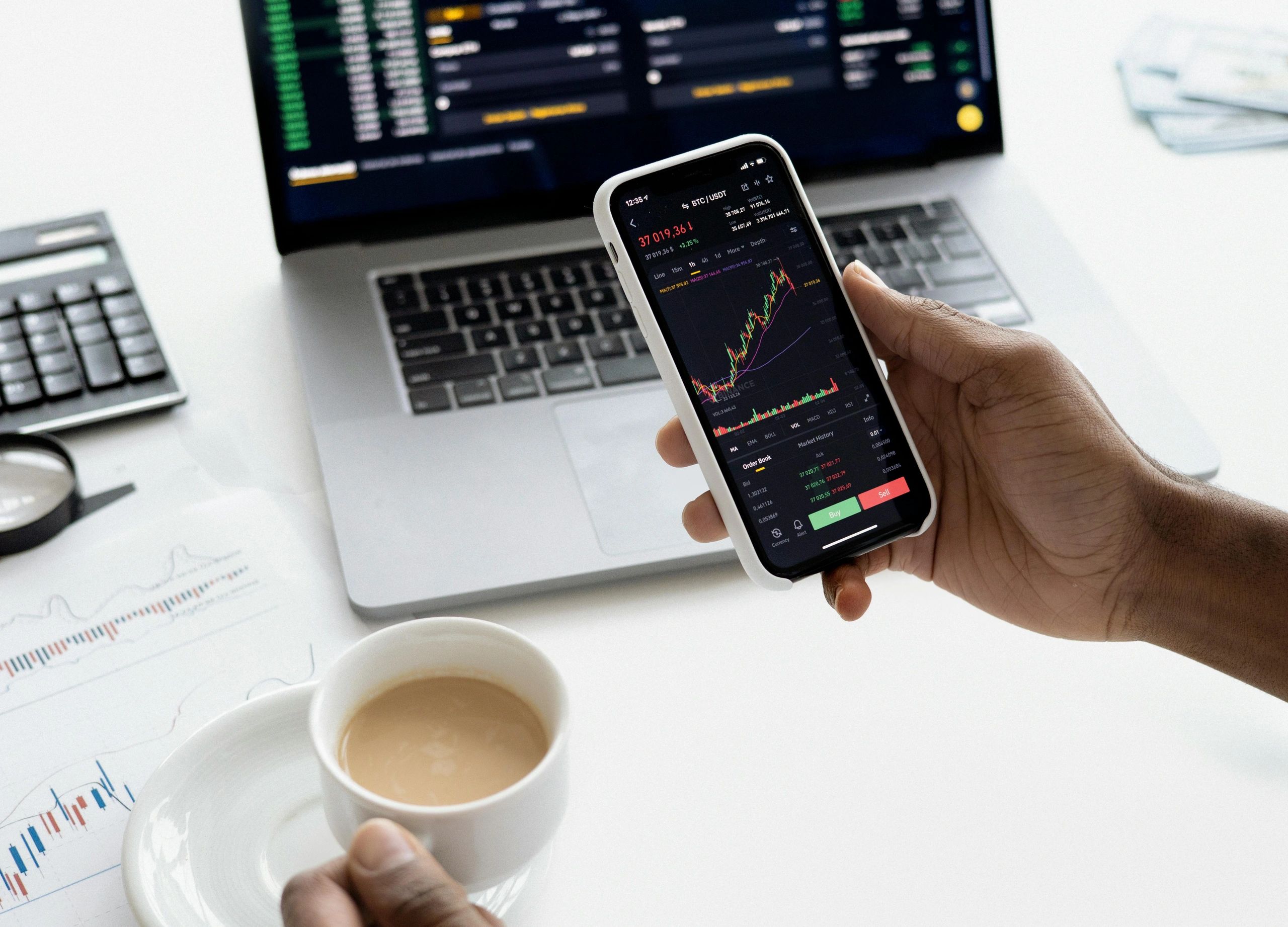
Quantitative Techniques for Enhanced Trading Profits
In the dynamic realm of finance, algorithmic trading strategies have emerged as a potent tool for profit optimization. These sophisticated systems leverage mathematical models and computer algorithms to execute trades at lightning speed, capitalizing on market inefficiencies and fleeting opportunities. By automating the trading process, algorithmic strategies eliminate emotional biases, enhance execution precision, and enable traders to analyze vast amounts of data in real time. A well-crafted algorithmic strategy can encompass a range of approaches, such as trend following, mean reversion, and arbitrage.
- Furthermore, algorithmic trading platforms offer extensive backtesting capabilities, allowing traders to simulate their strategies on historical data and evaluate their potential performance before deploying them in live markets.
- The emergence of artificial intelligence (AI) has revolutionized the field of algorithmic trading, enabling the development of more sophisticated strategies that can learn from market trends and adapt to changing conditions.
- Consequently, embracing algorithmic trading strategies can provide traders with a significant advantage in today's competitive financial landscape.
Developing Intelligent Automated Trading Systems
Deploying intelligent automated trading systems demands a strategic approach. Algorithmic analysis is crucial for pinpointing profitable patterns within market movements. Deep learning models can optimize trading tactics, enabling systems to adjust to shifting market circumstances. Robust control frameworks are indispensable to protect capital and facilitate sustainable performance.
A well-designed automated trading system should proactively track market data, implement trades automatically, and refine its strategies based on live market feedback. Robust backtesting and evaluation are crucial for assessing the effectiveness of a trading system before deployment.
Explore Algorithmic Trading: A Comprehensive Guide
Algorithmic trading has emerged as a influential force in the financial markets, permitting traders to execute advanced strategies with speed. This more info comprehensive guide will equip you with the understanding required to master algorithmic trading and unlock its potential. We'll delve the fundamentals of algorithmic development, approaches, and risk management, delivering you with a robust foundation for success.
- From the foundation of programming to understanding market data and implementing trading algorithms, this guide will cover every aspect of algorithmic trading.
No matter your current expertise in trading or programming, this guide is structured to assist you on your quest to becoming a successful algorithmic trader.
Financial Market Automation: A New Era
The progression of financial markets has been marked by constant transformation. One of the most profound changes in recent years has been the rise of automation. Algorithms and advanced software are now driving a wide range of functions within these markets, from high-frequency trading to risk management. This adoption of automation offers both unprecedented possibilities and presents a number of concerns that need to be carefully navigated.
- Higher productivity
- Reduced costs
- Improved accuracy
Ultimately, the future of financial markets will be defined by automation. Adapting to these technological advancements while overcoming their potential drawbacks will be essential for market players to succeed in the years to come.
Quantitative Trading: Leveraging Data for Success
In the dynamic realm of finance, quantitative trading has emerged as a transformative force. This data-driven approach employs complex algorithms and statistical models to exploit profitable market opportunities. By harnessing the vast wellspring of financial data, quantitative traders aim to mitigate volatility while maximizing yield.
- Advanced algorithms are used to analyze market trends and predict price movements.
- High-frequency trading strategies enable rapid execution of trades, capturing fleeting price fluctuations.
- Machine learning techniques are increasingly integrated to improve trading performance.
Quantitative traders possess a strong understanding of both financial markets and computational science. Their skillset enables them to develop and implement effective trading strategies that excel in the highly competitive environment of finance.
Navigating Automated Trading Platforms: Reviews and Comparisons
Venturing into the world of automated trading can feel overwhelming. With a plethora of platforms vying for your attention, identifying the right one is crucial for success. This is where in-depth reviews and comparisons become invaluable tools. They provide a detailed analysis of various platforms, outlining their capabilities, pros, weaknesses, and overall user experience. By evaluating these reviews, you can obtain a clear understanding of each platform's suitability for your individual trading aspirations.
A well-structured comparison will often present key indicators side-by-side, enabling you to quickly assess differences. These metrics might include fees, tradingassets, customer support, and platform usability. Don't solely rely on marketing claims; delve into real-user experiences to uncover the true strengths and weaknesses of each platform.
- Conduct your research diligently, consulting reputable sources and reviews from trusted financial analysts.
- Consider your own trading approach and needs when selecting your options.
Backtesting Algorithmic Trading Strategies: A Critical Step
Before deploying an algorithmic trading strategy into the live market, it is imperative to thoroughly backtest its performance. Backtesting involves replicating historical market data and evaluating how the strategy would have behaved under those conditions. This process enables traders to identify potential strengths and weaknesses of their strategies, fine-tune parameters, and assess its overall risk and probability of success.
- A robust backtesting framework should encompass multiple market conditions, including bull, bear, and volatile phases.
- Moreover, it is important to consider various timeframes and financial instruments when performing backtests.
- By performing thorough backtesting, traders can significantly strengthen their chances of achieving profitable results in live trading.
Crafting Effective Automated Trading Rules
Automating your trading strategy can yield significant benefits, but designing effective rules is crucial. Begin by identifying your trading style. Are you a trend follower? Once you've defined your style, craft rules based on technical indicators, market trends, and your risk tolerance. Bear in mind to evaluate your rules rigorously before deploying them in live trading.
Continuously analyze your automated system's performance and modify your rules as needed to improve results. Continue informed about market changes and evolve your rules accordingly.
Behavior of Automated Trading: Staying Ahead of the Curve
Automated trading has revolutionized our markets, offering complex algorithms to execute trades with speed. However, despite its technological prowess, automated trading is ultimately driven by human psychology. Understanding this interplay of emotions, biases, and decision-making processes is crucial for investors to succeed in this dynamic landscape. The constant evolution of market trends and tools demands a agile mindset that can respond to changing conditions.
- Staying abreast of the latest developments in data science is paramount.
- Continuously evaluating your trading approach can help you recognize areas for improvement.
- Managing risk remains a fundamental pillar of successful automated trading.
By cultivating a analytical mindset and embracing advancement, traders can navigate the complexities of automated trading and capitalize on its immense potential.
Enduring Market Volatility with Automated Strategies
In the volatile world of finance, market volatility are an inherent reality. Investors constantly seek to reduce risk and enhance returns. Automated strategies have emerged as a powerful approach for withstanding these turbulences. By leveraging algorithms and complex models, these systems can implement trades efficiently, often with greater accuracy than human methods.
- Additionally, automated strategies can help in maintaining a structured approach to trading, limiting the influence of emotions.
- Therefore, allows for more rational decision-making, which can be crucial in volatile market environments.
Risk Management in Automated Trading Systems
Implementing comprehensive risk management strategies is essential for the success of automated trading systems. These systems, while capable of executing trades at high speeds and with accuracy, are inherently exposed to market volatility and unforeseen occurrences. Sound risk management involves assessing potential threats, deploying safeguards, and continuously adjusting the system to minimize potential drawdowns.
- Fundamental risk management practices in automated trading systems include:
- Order sizing strategies to control exposure to any single security
- Stop-loss orders to automatically liquidate positions when predetermined price targets are reached.
- Asset Allocation across different markets to reduce the impact of any single portfolio's performance
- Backtesting of trading strategies to assess their suitability in different market conditions.
The Agile World of Algorithmic Trading
High-frequency trading operates at an astonishing velocity, leveraging sophisticated algorithms to execute thousands of trades per second. This relentless pursuit of speed allows traders to profit from even the infinitesimal market shifts. Moreover, HFT's automated nature adds to its precision, minimizing human intervention and enhancing the volume of market participation.
Trading Cryptocurrencies on Autopilot: The Bot Revolution
The fluctuating landscape of copyright trading presents both opportunities and challenges for investors. copyright enthusiasts|Investors are constantly seeking methods to maximize their profits while minimizing volatility. copyright trading bots have emerged as a promising solution, optimizing the trading process and potentially producing consistent returns.
- Leveraging sophisticated algorithms, these bots can execute trades at rapid speeds, adapting to market movements in real-time.
- They can also interpret vast amounts of market intelligence, identifying profitable trading patterns.
Nevertheless, it is crucial to grasp the potential pitfalls associated with using copyright trading bots.
Automated Portfolio Management: Optimizing Returns
In the dynamic landscape of finance, investors/traders/portfolio managers constantly seek strategies to maximize returns while minimizing/mitigating/reducing risk. Automated/AI-powered/Algorithmic portfolio management has emerged as a compelling solution, leveraging cutting-edge technology to optimize investment decisions. These systems utilize complex algorithms and sophisticated data analysis to create/develop/construct diversified portfolios tailored to individual risk tolerances/appetites/thresholds. By continuously monitoring/tracking/evaluating market trends and adjusting/rebalancing/optimizing asset allocations in real-time, automated portfolio management aims to enhance/improve/boost returns and achieve/meet/exceed predefined investment goals.
Exploiting Machine Learning for Algorithmic Trading
The realm of algorithmic trading experiences a paradigm shift with the integration of machine learning models. These sophisticated platforms can analyze vast pools of information to identify patterns and trends that may escape human investors. By utilizing the predictive power of machine learning, algorithmic trading approaches can enhance returns while minimizing exposure.
- Furthermore, machine learning algorithms perpetually learn to market fluctuations, guaranteeing that trading actions remain current.
- Consequently, machine learning is transforming the landscape of algorithmic trading, enabling traders to master the complexities of financial markets with improved precision and efficiency.
Real-Time Data Analysis Driving Automated Trading Strategies
In the dynamic landscape of financial markets, swift and precise decision-making is paramount. Automated trading systems are increasingly employed to capitalize on market fluctuations and optimize returns. At the heart of these systems lies real-time data analysis, a crucial component for generating effective trading decisions. By continuously processing vast amounts of market data, sophisticated algorithms can identify trends and execute trades at lightning speed. Real-time data feeds encompass a wide range of information, including price movements, order book depth, news events, and macroeconomic indicators.
This deluge of data presents both challenges and advantages. Advanced analytical techniques, such as machine learning and deep learning, are deployed to uncover actionable insights from this complex dataset. These algorithms can forecast future price movements with increasing accuracy, enabling traders to make informed decisions. Moreover, real-time data analysis facilitates risk management by providing a comprehensive view of market conditions and potential threats.
- Moreover, real-time data analysis can help identify arbitrage opportunities, where price discrepancies exist across different markets or asset classes.
- Ultimately, the ability to process and analyze real-time data is essential for success in the volatile world of automated trading.
Finance's Trajectory: Automation & Intelligent Trading
The financial sector stands poised on the precipice of a revolutionary transformation, driven by the inexorable advances in automation and intelligent trading. Such technologies are steadily reshaping traditional approaches, ushering in an era of unprecedented efficiency, precision, and potential.
- Machine learning systems are increasingly taking center stage, capable of analyzing vast mountains of data at lightning speed to identify patterns and execute trades with unrivaled precision.
- This shift is not merely theoretical; it's already realizing in real-world financial markets, revolutionizing the roles of traditional market participants.
- Streamlined workflows is freeing human analysts from mundane, repetitive tasks, enabling them to focus on more nuanced aspects of finance.
However, this landscape is not without its complexities. Guaranteeing the stability of these systems, addressing ethical considerations, and managing potential risks will be paramount to navigating this transformative era.
Ethical Considerations in Automated Trading
Automated trading algorithms have a novel set of ethical challenges. Since these systems can enhance efficiency and profitability, they also raise concerns about fairness, transparency, and potential bias. Ensuring that automated trading continues aligned with human values demands careful reflection of the broader effects on market integrity and societal well-being.
- Algorithmic bias can lead to discriminatory outcomes, strengthening existing inequalities in financial markets.
- Lack of transparency in trading algorithms allows it difficult to interpret their decision-making processes, eroding trust and accountability.
- The speed and scale of automated trading can intensify market volatility, heightening the risk of systemic shocks.
Unveiling Algorithmic Trading: A Beginner's Guide
Algorithmic trading, often referred to as algo-trading, employs a set of pre-programmed instructions that execute trades automatically based on specific market conditions. Distinct from traditional trading methods where decisions are made manually by traders, algorithmic trading employs computational power and complex mathematical models to analyze market data in real-time. This automated approach offers several potential benefits, including increased efficiency, reduced emotional bias, and the ability to execute trades at lightning speed.
For beginners, algorithmic trading might seem like a complex and daunting concept. However, with a basic understanding of market mechanics and algorithmic fundamentals, you can demystify this exciting realm.
- We shall explore the key concepts behind algorithmic trading and clarify its potential impact on the financial markets.
- Additionally, we will analyze some common types of algorithms and their uses in real-world trading scenarios.